
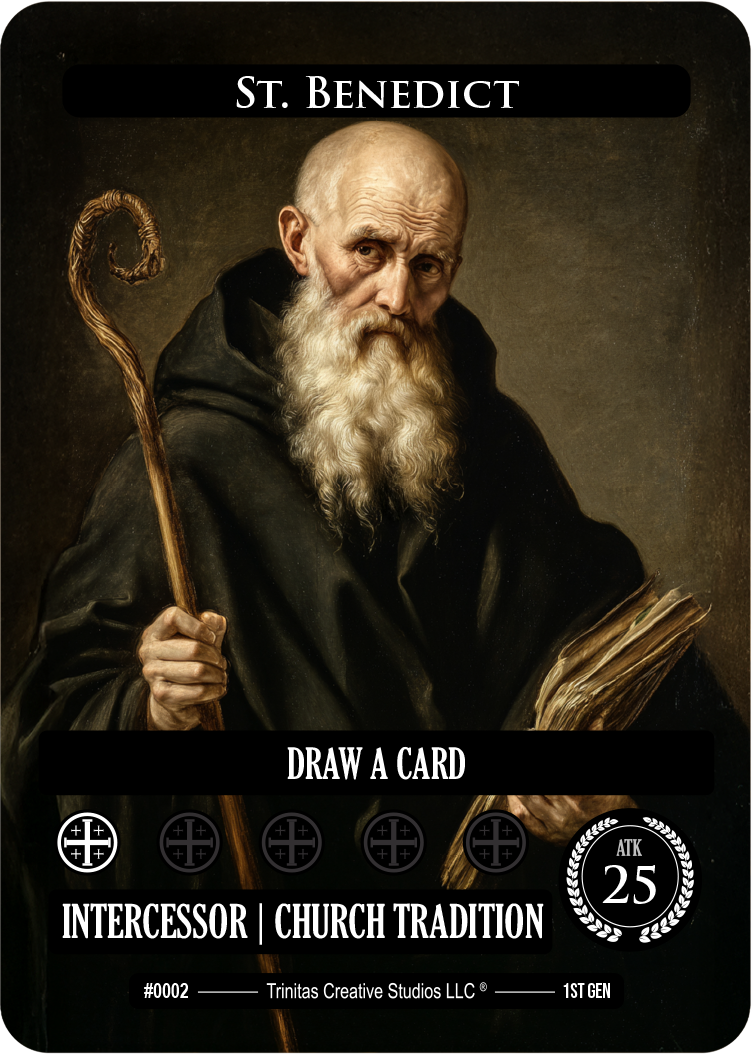
St. Benedict of Nursia was the founder of Western monasticism and one of the most influential saints in Church history. Born in Italy during the fall of the Roman Empire, Benedict left behind worldly life to pursue holiness through prayer, fasting, and solitude. He first lived as a hermit at Subiaco, where his holiness attracted many followers seeking spiritual guidance.
Benedict later founded several monasteries, including the famous monastery of Monte Cassino, and wrote the Rule of Saint Benedict, which established a balanced way of monastic life centered on prayer, obedience, humility, and labor. His Rule became the foundation of Benedictine monasticism and helped preserve Christian learning and culture throughout Europe for centuries.
Many miracles are attributed to Saint Benedict, including healings, prophecy, and protection against evil. The Saint Benedict Medal remains one of the Church’s most recognized sacramentals for spiritual protection. Benedict died peacefully in prayer among his monks, faithfully serving Christ until the end of his life.
Dialogues of Saint Gregory the Great – Book II
Primary historical account of the life, miracles, and holiness of Saint Benedict.
The Rule of Saint Benedict
Benedict’s guide for monastic life, emphasizing prayer, humility, obedience, and work.
The Golden Legend – Life of Saint Benedict
Traditional account describing Benedict’s miracles, spiritual battles, and monastic foundations.
Patron of:
Europe, Monks, Students, Schoolchildren, Monastic Communities, Protection Against Evil
Feast Day:
Traditional – March 21
Novus Ordo – July 11
Roman Martyrology – March 21
Information provided by Santapedia