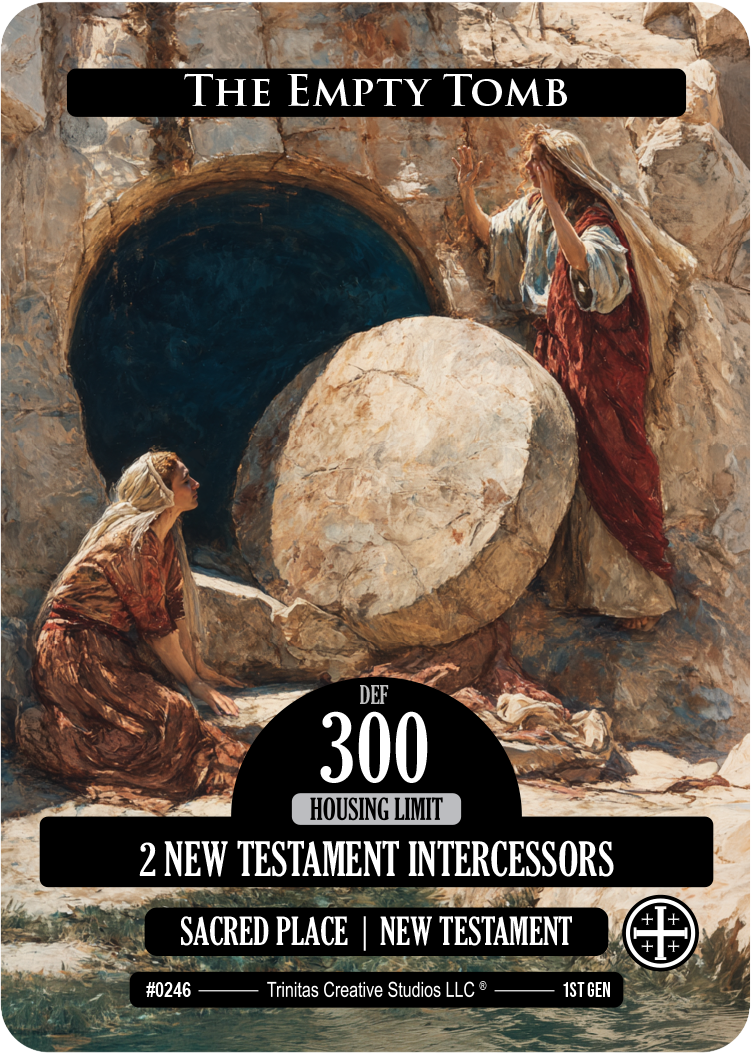
The Empty Tomb is the burial place where Jesus Christ was laid after His crucifixion and from which He rose on the third day. After Jesus was buried in a tomb belonging to Joseph of Arimathea, a large stone was placed at its entrance and guards were stationed nearby. On the morning of the Resurrection, His followers discovered that the stone had been rolled away and the tomb was empty (Matthew 28:1–6).
The Empty Tomb stands as one of the central signs of the Christian faith, bearing witness to Christ’s victory over sin and death. It became the place where the first proclamation of the Resurrection was made and where the disciples began to understand the fulfillment of Jesus’ promises.
As a sacred place, the Empty Tomb symbolizes hope, new life, redemption, and the triumph of God’s power through the Resurrection of Jesus Christ.
Bible / Historical References:
Matthew 28:1–6
The women discover the empty tomb and hear the angel’s proclamation that Jesus has risen.
Mark 16:1–8
The Resurrection is announced at the tomb.
Luke 24:1–12
The disciples learn that Christ is no longer among the dead.
John 20:1–18
Mary Magdalene encounters the risen Christ after discovering the empty tomb.