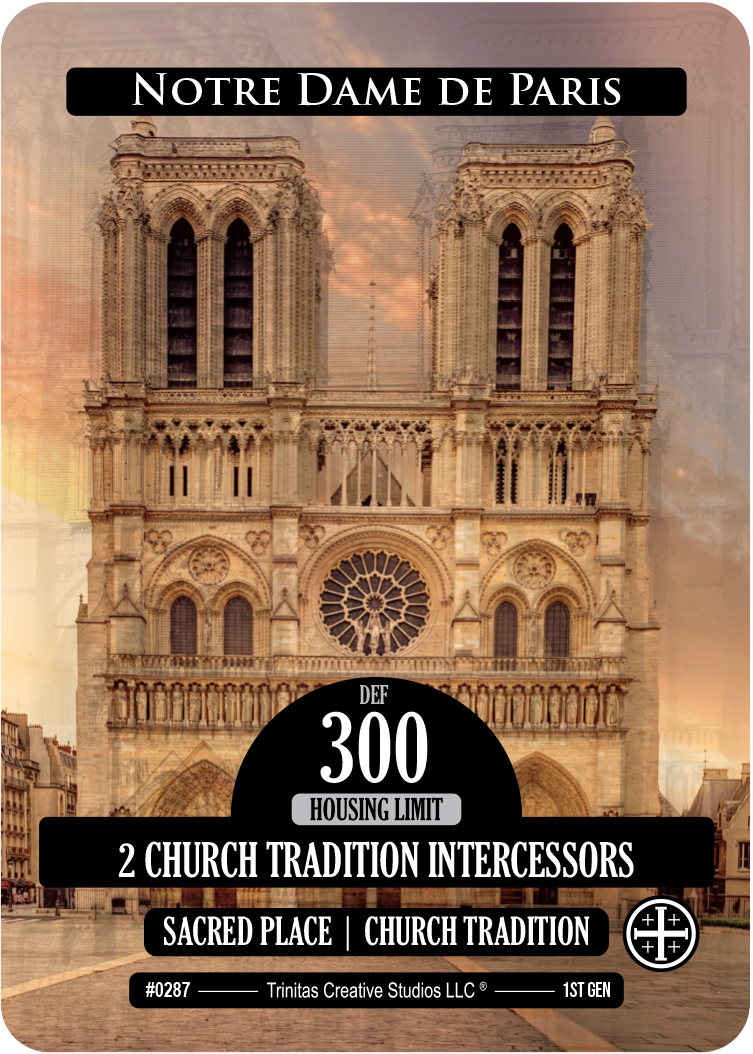
Card Type: Sacred Place | Timeline: Church Tradition
Overview:
Notre-Dame de Paris is one of the most famous cathedrals in the world and one of the most important churches dedicated to the Blessed Virgin Mary. Located in the heart of Paris on the Île de la Cité, the cathedral was constructed between the 12th and 14th centuries and became a masterpiece of Gothic architecture.
For centuries, Notre-Dame has served as a center of prayer, worship, pilgrimage, and major events in the life of the Church and France. The cathedral is renowned for its soaring vaults, magnificent rose windows, sacred art, and treasured relics. Among the relics traditionally preserved there is the revered Crown of Thorns.
Following the devastating fire of 2019, extensive restoration efforts were undertaken to preserve and restore the cathedral. Notre-Dame continues to stand as a symbol of Christian faith, perseverance, and devotion to the Mother of God.
The cathedral’s name, “Notre-Dame,” means “Our Lady”, reflecting its dedication to the Blessed Virgin Mary.
Bible / Historical References:
Construction of Notre-Dame de Paris (1163–1345)
The cathedral became one of the greatest monuments of medieval Christianity.