
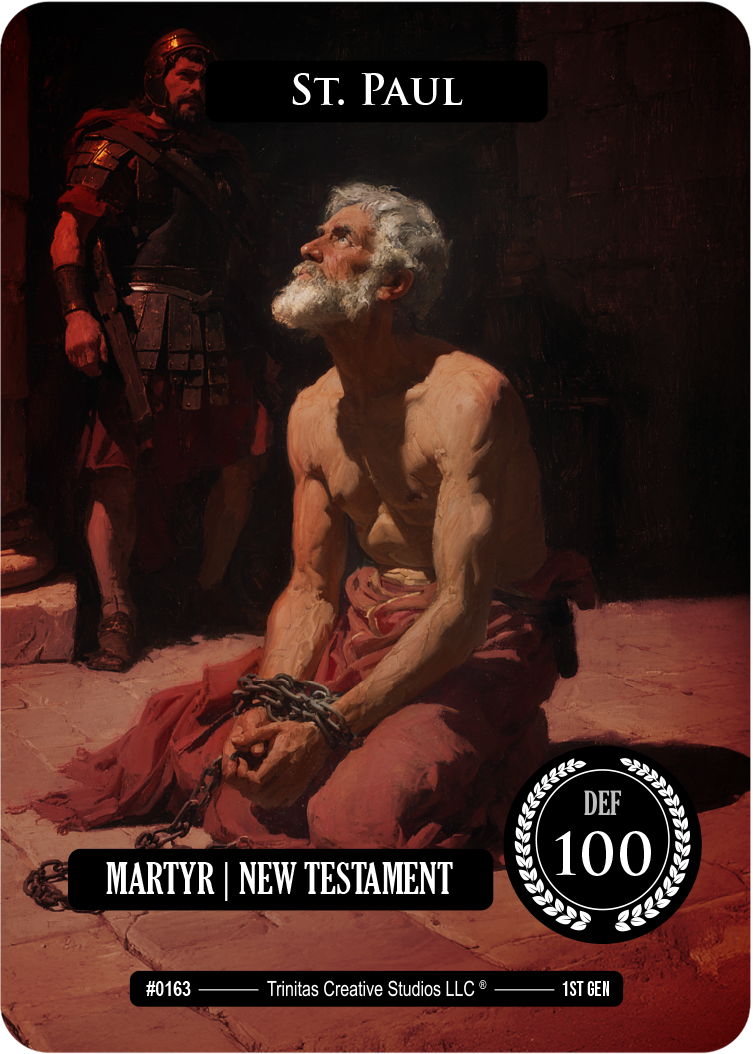
St. Paul the Apostle is one of the most significant men in the history of the Church. He was a Roman citizen of Jewish descent who was born Saul of Tarsus and was a Pharisee who had been educated by the great teacher Gamaliel. He was zealously opposed to the rise of the Christian faith and became a chief persecutor of the early Church. One day when he was on the road to Damascus he was confronted by Jesus in a blinding light and underwent a massive and total conversion of heart and mind. He took on the new name of Paul and became one of Christ’s most devoted Apostles. The letters (epistles) he wrote have become the greater part of the New Testament and they teach key doctrines, perhaps culminating with his teaching on charity being the greatest of all virtues. He tirelessly preached to both Jews and Gentiles, establishing Christian communities across the Roman Empire. Paul’s teachings emphasize the transformative power of Christ’s resurrection and the universal call to salvation. He suffered greatly for the faith, enduring imprisonment, beatings, and ultimately martyrdom in Rome. His life exemplifies conversion, missionary zeal, and unwavering commitment to Christ, making him a cornerstone of Christian theology and tradition.
Acts 7:58–8:3 Saul witnesses the stoning of Stephen and begins persecuting the church.
Philippians 3:4–6 Paul describes his Jewish heritage and zeal for the law.
Acts 9:1–19 Saul encounters Jesus, is blinded, and later healed by Ananias.
Acts 22:6–16 Paul recounts his conversion before a Jewish audience.
Acts 26:12–18 Paul shares his conversion story before King Agrippa.
Acts 9:20–30 Paul begins preaching in Damascus and Jerusalem.
Galatians 1:11–24 Paul explains his calling and independence from the other apostles.
Acts 13–21 Detailed accounts of Paul’s three missionary journeys:
Preaching in Asia Minor, Greece, and beyond.
Founding churches and writing letters.
Acts 21:27–28:31 Paul is arrested in Jerusalem, appeals to Caesar, and is taken to Rome.
Paul’s letters (Romans, Corinthians, Galatians, Ephesians, Philippians, Colossians, Thessalonians, etc.) contain his theology and pastoral guidance. These are not narrative but reveal his life and struggles.
Patron of:
Missionaries, Theologians, Evangelists, Authors and Writers, Public Workers
Feast Day:
June 29
Conversion of Paul – January 25
Illustration by: Colton Rompala