
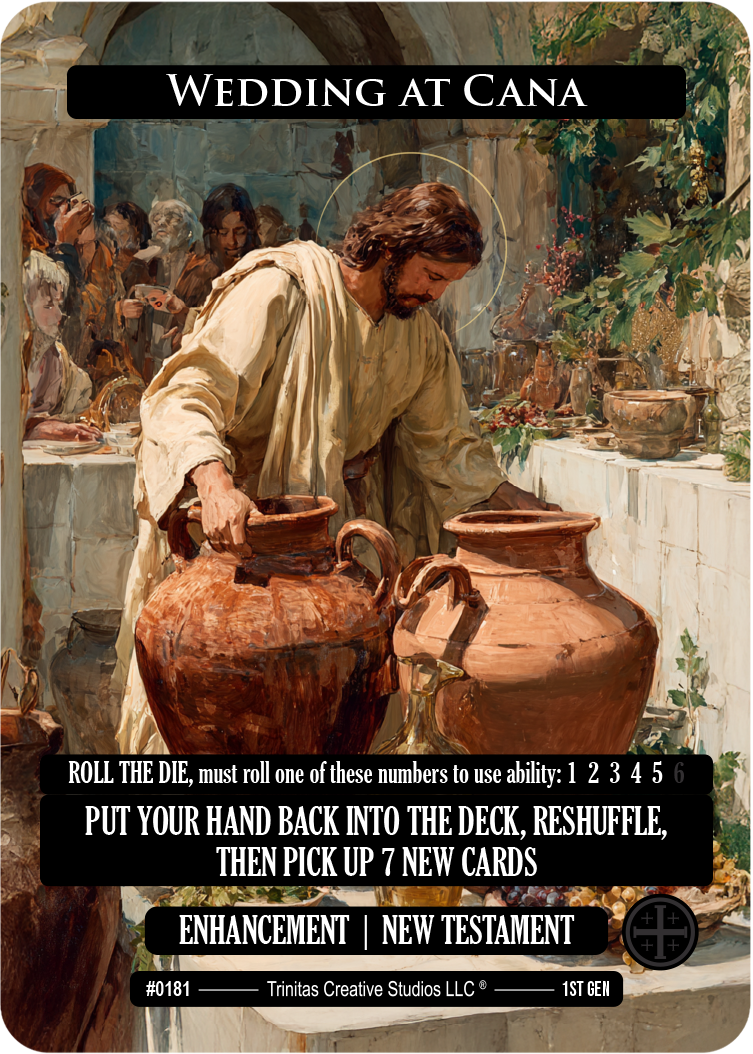
The Wedding at Cana was where Jesus performed His first public miracle. It is considered the beginning of his public ministry and is recounted in John 2:1-11. Jesus, Mary, and the disciples are at a marriage feast when the wine for the celebration runs out. This would have been the responsibility of the groom’s family, and would have brought shame on the occasion, calling into question his ability to provide for the bride, and therefore jeopardizing the marriage. The Blessed Virgin, understanding this, simply tells Jesus “They have no wine.” At this moment, Jesus addresses his mother with her eternal title when he says “Woman, what is that to me and to thee? My hour is not yet come.” Here, Jesus is emphasizing to her that if he intervenes in the manner she suggests, their relationship with the rest of the world will permanently change. His power and authority will be revealed, and so will her identity as the woman whose “seed will crush the head of the serpent” from Genesis 3:15. The Blessed Mother then delivers one of the most powerful lines in Holy Scripture. She tells the servants, “Do whatever he tells you.” Jesus tells them to go fill the massive ceremonial washing jars with water. They do so, and Jesus then tells them to draw some of the water from each jar and take it to the chief steward. When the steward tastes it, not knowing where it came from, he tells the groom that normally the good wine is served first and then when all have had their fill the lesser wine is served. Here, the best wine has been saved until now. At this moment, Jesus disciples witness Christ manifesting his glory and they believe in Him.
John 2: 1-11
On the third day there was a marriage at Cana in Galilee, and the mother of Jesus was there; Jesus also was invited to the marriage, with his disciples. When the wine gave out, the mother of Jesus said to him, “They have no wine.” And Jesus said to her, “O woman, what have you to do with me? My hour has not yet come.” 5 His mother said to the servants, “Do whatever he tells you.” Now six stone jars were standing there, for the Jewish rites of purification, each holding twenty or thirty gallons. Jesus said to them, “Fill the jars with water.” And they filled them up to the brim. He said to them, “Now draw some out, and take it to the steward of the feast.” So, they took it. When the steward of the feast tasted the water now become wine, and did not know where it came from (though the servants who had drawn the water knew), the steward of the feast called the bridegroom and said to him, “Every man serves the good wine first; and when men have drunk freely, then the poor wine; but you have kept the good wine until now.” This, the first of his signs, Jesus did at Cana in Galilee and manifested his glory; and his disciples believed in him. Revised Standard Version
Holy Rosary: The Wedding Feast at Cana is the second Luminous Mystery of the Holy Rosary. The virtue associated with meditating on these events are obedience and trust in God’s will.
Illustration by: Colton Rompala