
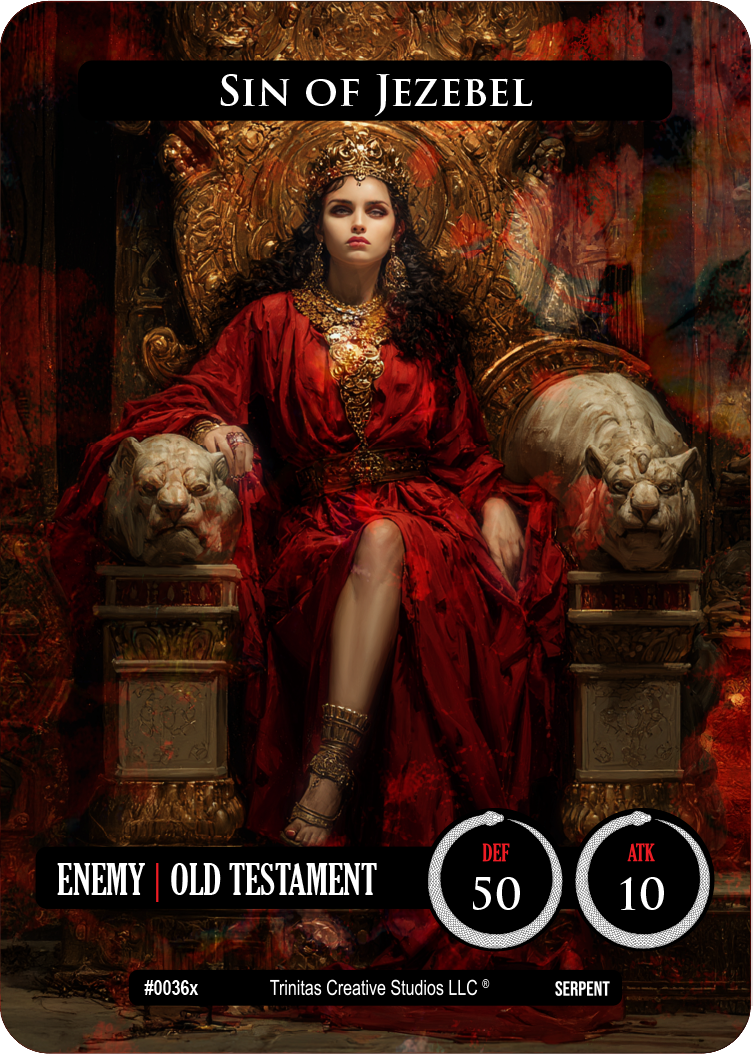
“Jezebel, a Phoenician princess and wife of King Ahab of Israel, is portrayed in the Old
Testament (1 Kings 16–21; 2 Kings 9) as a symbol of idolatry and moral corruption. She
introduced Baal worship into Israel, directly violating the First Commandment, and
persecuted the prophets of the Lord, notably seeking Elijah’s death. Her sins included
promoting false gods, manipulating power for personal gain, and orchestrating Naboth’s
unjust execution to seize his vineyard—an act of grave injustice and greed. Jezebel’s
defiance of God’s covenant led to divine judgment: her violent death and desecration,
fulfilling Elijah’s prophecy. In the New Testament, Revelation 2:20 references “that
woman Jezebel” as a metaphor for false teachers who seduce believers into immorality
and idolatry. This allusion underscores her enduring representation of spiritual infidelity
and corruption within the Church. Jezebel exemplifies the dangers of turning from God,
abusing authority, and leading others into sin—warnings that remain relevant for
safeguarding faith and moral integrity.
Jezebel’s story connects to several of the seven deadly sins, which Catholic teaching
identifies as root vices leading to other sins:
1. Pride – Jezebel’s arrogance in defying God’s law and elevating Baal worship
above the covenant reflects pride, the root of all sin. She believed her will could
override divine authority.
2. Greed – Her orchestration of Naboth’s murder to seize his vineyard (1 Kings 21)
is a clear act of greed, prioritizing material gain over justice and life.
3. Envy – Jezebel envied Naboth’s possession, which fueled her plotting and
deceit.
4. Wrath – Her violent persecution of God’s prophets and threats against Elijah (1
Kings 19) show uncontrolled anger against those who upheld truth.
5. Lust – While not explicitly sexual, her lust for power and influence corrupted
Israel’s spiritual integrity.
6. Gluttony – Symbolically, her indulgent lifestyle and feasting in Ahab’s court
suggest excess and disregard for God’s commands.
7. Sloth – Spiritual sloth appears in her rejection of God’s covenant, neglecting the
true worship owed to Him.”
Illustration by: Colton Rompala