
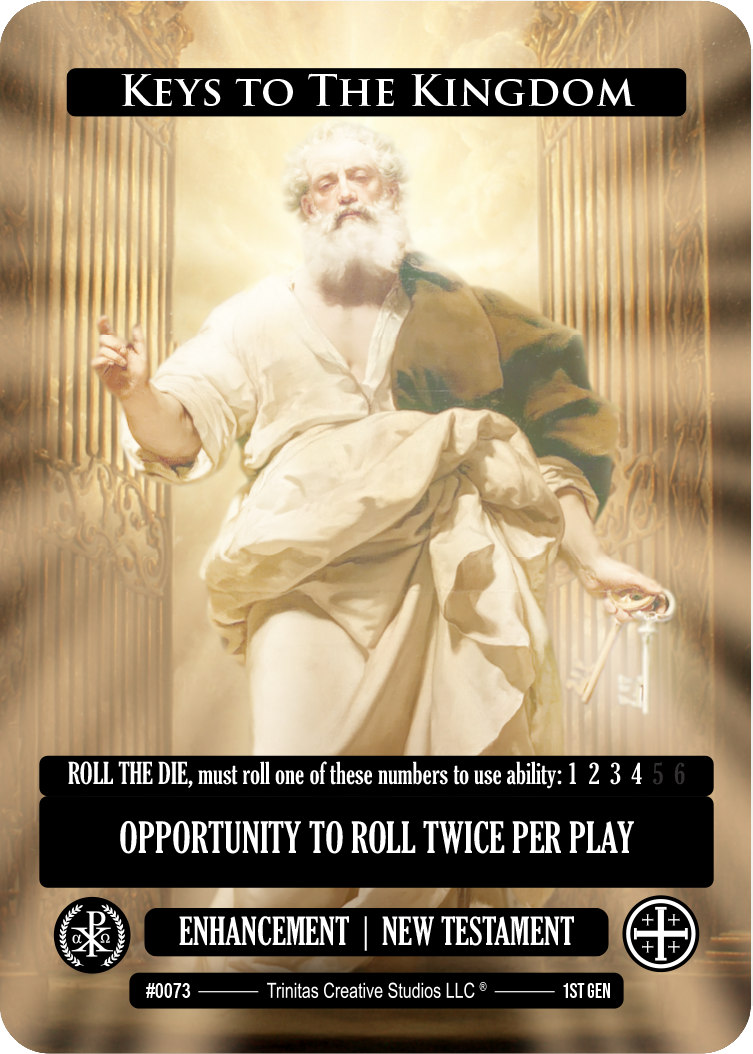
The “Keys to the Kingdom” symbolize the authority entrusted by Jesus Christ to Saint Peter and, through him, to the leadership of His Church. After Peter boldly confessed Jesus as the Christ, the Son of the living God, Christ declared that He would build His Church upon this rock and promised to give Peter the keys of the kingdom of heaven. In biblical tradition, keys represent stewardship, governance, and authority entrusted by a king to his servant.
Through this gift, Peter received the authority to bind and loose in matters concerning the Church, guiding the faithful in truth and preserving unity among believers. The image of the keys became one of the most enduring symbols of apostolic authority and the mission of the Church to proclaim salvation throughout the world.
The keys also signify the mercy of God, who entrusts His Church with the preaching of repentance, forgiveness of sins, and the guidance of souls toward eternal life.
Matthew 16:13–19
Christ gives Saint Peter the keys of the kingdom of heaven and authority to bind and loose.
Isaiah 22:20–22
The key of the house of David symbolizes royal authority and stewardship.
John 21:15–17
Christ commands Peter to feed and shepherd His flock.
Acts 2:14–41
Peter exercises leadership by preaching at Pentecost.
Catechism of the Catholic Church (551–553)
Teaching concerning Peter’s authority and the keys of the kingdom.
Feast Day:
Chair of Saint Peter – February 22
Information provided by Santapedia