
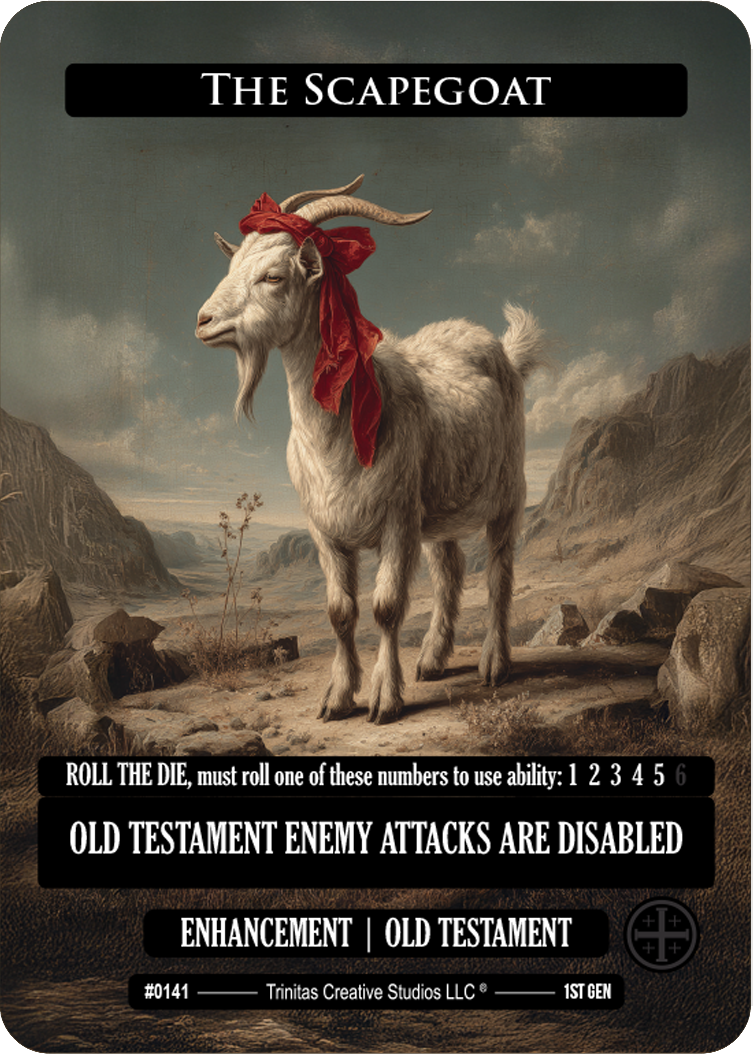
The Scapegoat was a central element of the Day of Atonement (Yom Kippur), the most solemn day of repentance and reconciliation in ancient Israel. On this holy day, the High Priest performed sacred rituals to make atonement for the sins of the people. Among these rites, two goats were presented before the Lord: one was offered as a sin offering, while the other became the scapegoat.
After confessing over the scapegoat the sins and transgressions of Israel, the High Priest symbolically placed the people’s guilt upon the animal. The goat was then led into the wilderness, carrying away the sins of the nation and signifying God’s desire to remove sin from His people. This dramatic act illustrated purification, forgiveness, and the restoration of covenant fellowship with God.
In Christian understanding, the scapegoat serves as a powerful foreshadowing of Jesus Christ, who bore the sins of the world and reconciled humanity to God through His sacrifice. The ritual highlights both the seriousness of sin and God’s mercy in providing a means of atonement.
Leviticus 16:5–10
Two goats are chosen for the Day of Atonement: one for sacrifice and one as the scapegoat.
Leviticus 16:20–22
The High Priest confesses Israel’s sins over the scapegoat, which is sent into the wilderness.
Leviticus 16:29–34
The Day of Atonement is established as a perpetual observance for Israel.
Psalm 102(103):12
“As far as the east is from the west, so far hath he removed our iniquities from us.”
Hebrews 9:11–14
Christ’s sacrifice fulfills and surpasses the atoning sacrifices of the Old Covenant.
Hebrews 13:11–12
Jesus suffers outside the city, echoing imagery associated with the removal of sin.
Information provided by Santapedia