
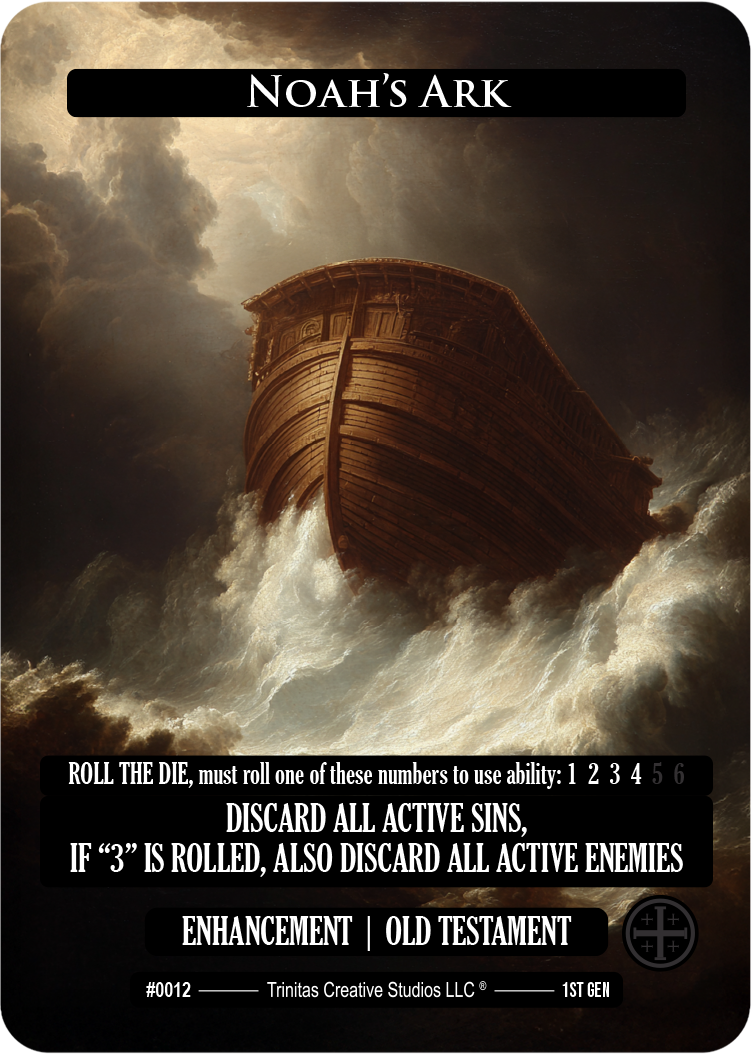
In the days when humans became numerous on Earth, their hearts were darkened, and all their thoughts and deeds were evil. This grieved the Lord God, and He decided to cleanse the Earth by causing the Great Flood. It would consume every living thing He had created. Noah, however, was a man who walked with God and found favor with Him. God willed to save Noah and his family from destruction, so He commanded Noah to build an ark. God gave Noah specific instructions on how to build the enormous boat, and that he should fill it with two of every kind of creature. Finally, he, his wife, his sons and their wives all boarded the ark, and God caused the floodwaters to rise as rain fell for forty days and forty nights. Everything on earth was washed away, but Noah and his family were safe. God placed a rainbow in the heavens as a promise never again to destroy the earth by a flood. St. Peter informs us that the flood prefigures baptism. As God once saved humanity through water, so the waters of baptism save us from original sin through the death and resurrection of Jesus Christ.
“Complete account in Genesis Chapters 6-9
Matthew 24:37–39 Jesus compares the days of Noah to the coming of the Son of Man, emphasizing that people were living normally until the flood came suddenly.
Luke 17:26–27 Similar to Matthew, Jesus uses Noah’s time to illustrate the unexpected nature of His return.
Hebrews 11:7 Noah is highlighted as an example of faith: he built the ark in reverent fear and became an heir of righteousness.
1 Peter 3:20 Peter mentions Noah and the ark in the context of salvation and baptism, noting that eight people were saved through water.
5. 2 Peter 2:5 Noah is called a “preacher of righteousness,” and the flood is cited as an example of God’s judgment on the ungodly.”
Illustration by: Colton Rompala