
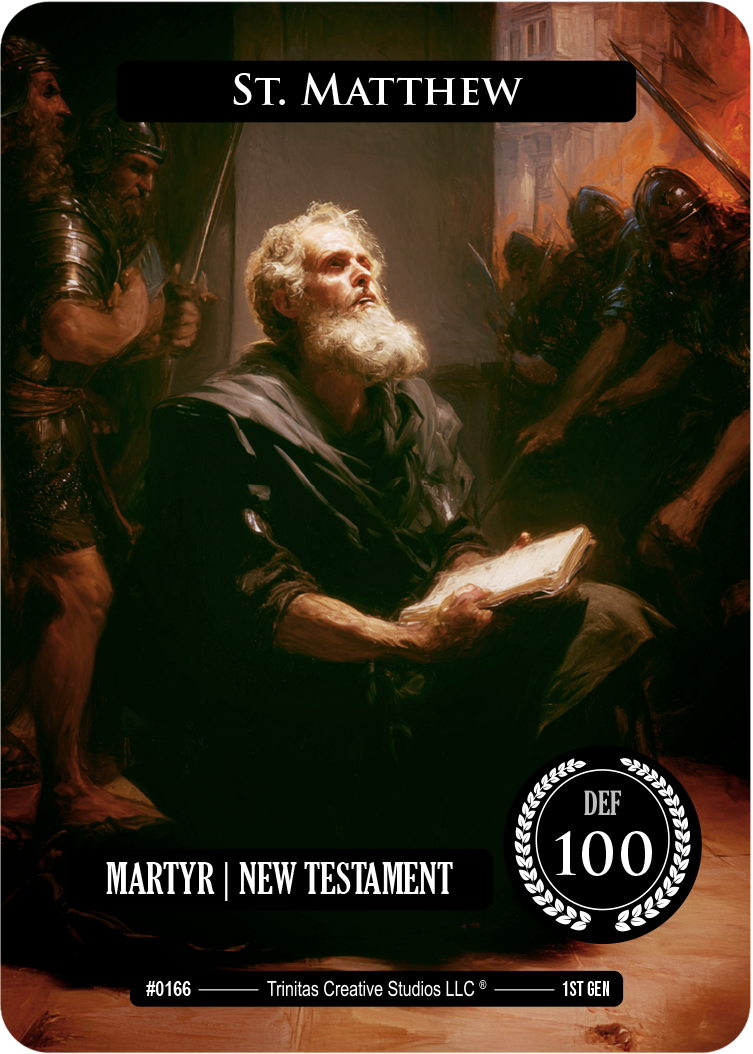
St. Matthew (Levi) was one of the twelve apostles. He is perhaps best known for having written the gospel credited to his name. Matthew lived in Capernaum and was a tax collector for the Romans, which was seen as one of the most despicable trades a Jewish man could perform in Jesus’ time. Thought of as extortionist traitors and thieves, tax collectors were associated with prostitutes and degenerates and were considered to be the scum of humanity. This made Matthew’s conversion such a touching moment in the gospel, as Jesus, knowing the social scandal it would cause, went directly to Matthew in plain view and simply said, “Follow me.” (Matthew 9:9) Matthew got up from his desk and never looked back. He received Christ’s salvation and turned completely away from his former life of sin; a perfect example for us all. His gospel is written with a Jewish audience in mind and comprehensively demonstrates how Jesus fulfilled the Old Testament prophecies. Matthew labored tirelessly to spread the Gospel throughout Judea and eventually went as far as Ethiopia, where he was martyred. His relics are kept at the cathedral at Salerno, Italy, where they have been venerated since around the 10th century.
“Matthew 9:9–13 Jesus calls Matthew from his tax collector’s booth.
Mark 2:13–17 Same account (Matthew is called Levi here).
Luke 5:27–32 Levi leaves everything and follows Jesus.
Matthew 10:2–4 Listed among the Twelve Apostles.
Mark 3:16–19, Luke 6:13–16, Acts 1:13 Other lists of the Twelve.
Matthew 9:10–13, Mark 2:15–17, Luke 5:29–32 Matthew hosts a meal for Jesus, and tax collectors and sinners attend.
Patron of:
Accountants, Bankers, Tax Collectors, Financial Workers
Feast Day:
September 21
Illustration by: Colton Rompala