
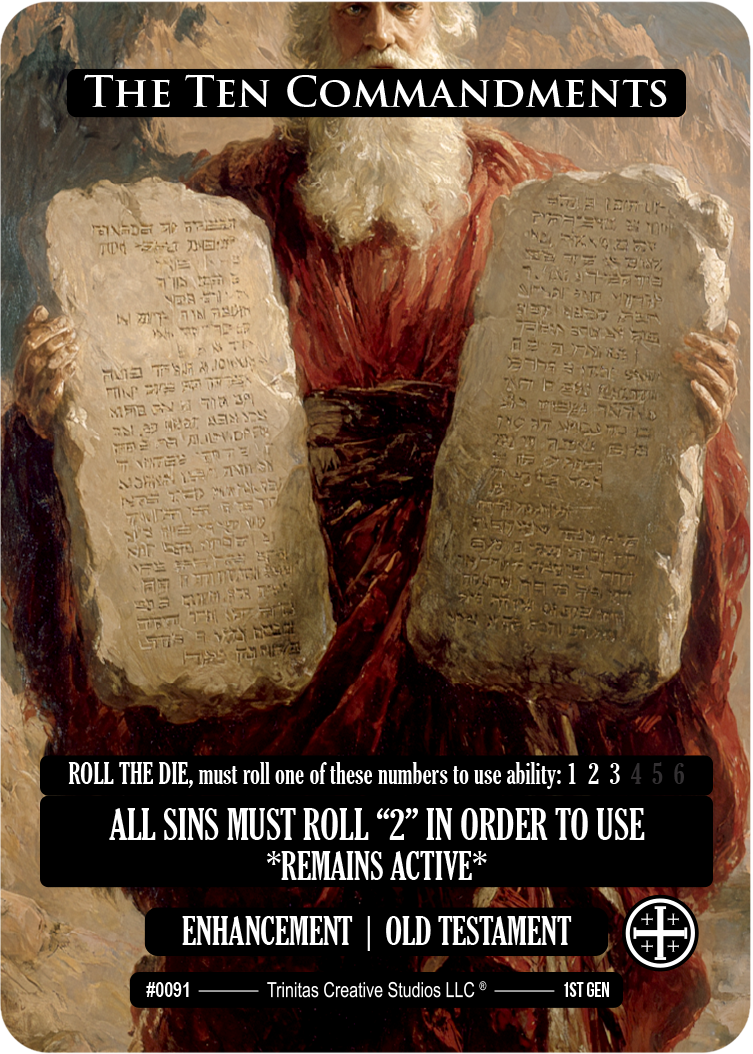
After Moses led the Israelites out of Egypt, he brought them through the wilderness to Mount Sinai. There, the Lord made a covenant with them to be their God, and as His people they were to follow His laws and obey His commandments. After three days of preparation, God brought Moses up the mountain and there amidst a thunderous cloud gave him the law written on two stone tablets. These are the basic rules by which the people were to live, and which are still central to Catholic moral teaching. They are:
I am the Lord your God. Thou shall not have strange gods before Me.
Thou shall not take the name of the Lord thy God in vain.
Remember to keep holy the Lord’s Day.
Honor thy father and mother.
Thou shall not kill.
Thou shall not commit adultery.
Thou shall not steal.
Thou shall not bear false witness against thy neighbor.
Thou shall not covet thy neighbor’s wife.
Thou shall not covet thy neighbor’s goods.
Exodus 20:1–17
This is the first and most well-known account, given by God to Moses on Mount Sinai.
It includes the full list of commandments as part of the covenant with Israel.
Deuteronomy 5:4–21
This is the second account, where Moses recounts the commandments to the Israelites before entering the Promised Land.
It’s essentially a restatement of the original commandments with slight wording differences.
Illustration by: Colton Rompala